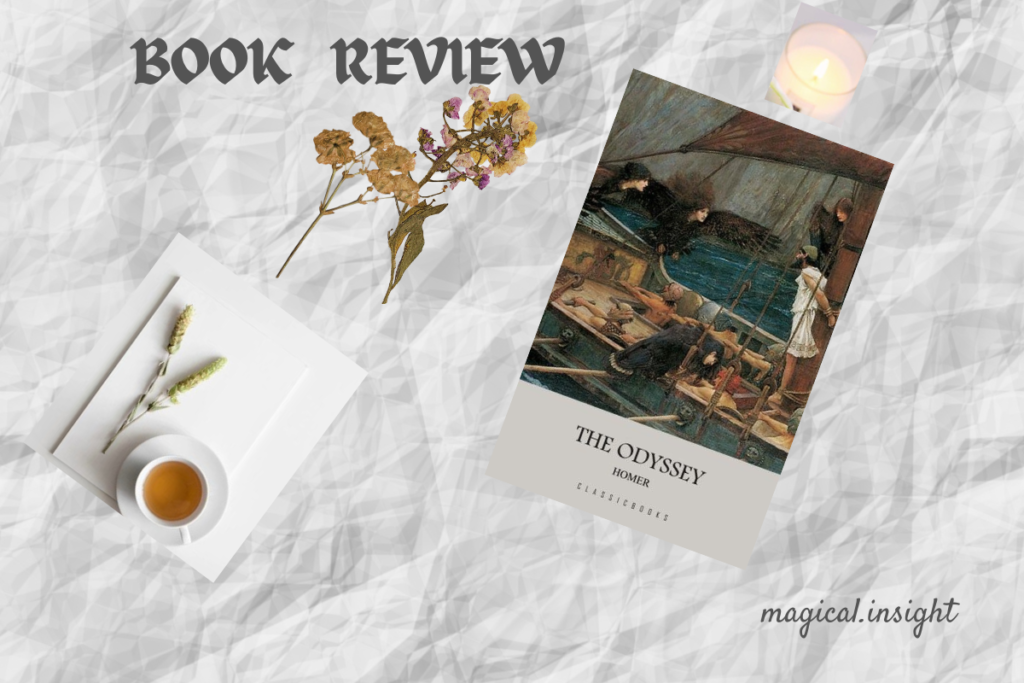
An iconic piece of Western literature and proof of the continuing power of narrative is the ancient epic tale “Odyssey,” credited to the great Greek writer Homer. This extraordinary book, which was written in the 8th century BC, has enthralled audiences for years with its vivid depiction of bravery, adventure, and the nuanced human experience. I hope to give helpful insights to future readers through my book review, assisting them in their literary choices. Furthermore, by expressing my views and feelings, I intend to add to the larger literary discussion, encouraging conversations and inspiring others to engage with this piece of literature.
The epic, which is a continuation of Homer’s earlier work “The Iliad,” centres on the shrewd and clever Greek hero Odysseus and his long voyage home following the destruction of Troy. Odysseus faces a variety of difficulties both natural and supernatural as he sails across the Mediterranean, which puts his cunning, fortitude, and endurance to the test. The epic covers themes of loyalty, persistence, temptation, and the complex connection between people and deities via his interactions with mythological animals, gods, and mortals. The reader is drawn into the rich fabric of ancient Greek society and mythology by Homer’s skill as a storyteller, which is evident in his vivid and frequently gorgeous descriptions. His use of literary elements like imagery and epithets adds to the complexity of the story and creates a setting that is both distant but very accessible. The work’s episodic structure reflects the way in which Odysseus’s journey develops through a succession of experiences, each with its own unique set of difficulties and moral teachings.
One of the most complicated and lasting literary characters in history is Odysseus. The superb portrayal of his dual nature as a smart strategist and a frail human being makes him an epitome of both the noble and fallen qualities of mankind. Odysseus fights against forces that want to discredit his identity throughout his trip, from the enticing promises of the nymph Calypso to the seductive sounds of the Sirens. His accomplishments and setbacks reflect the larger human search for identity as well as the battle to keep one’s identity in the face of hardship.
A key element of the story is the connections that Odysseus makes with both his fellow humans and the gods. The strength of lifelong love and commitment is exemplified by his dedication to his wife Penelope and by her unwavering devotion while he was away. His contacts with the gods, however, illustrate the arbitrary character of divine interference in human affairs and the fuzziness of the distinctions between fate, free will, and destiny.
As Odysseus meets numerous hosts and guests on his travels, “Odyssey” also explores the idea of xenia, the traditional Greek code of hospitality. These interactions shed light on Greek society’s ideals, which included the handling of strangers and the idea of reciprocal kindness. The celestial realm is depicted in Homer in a similarly alluring way. The gods actively influence mortal world events, and Athena especially helps Odysseus by offering protection and advice. However, given that they occasionally play with humans for their own entertainment, their involvement also raises ethical concerns about what they do.
In conclusion, “Odyssey” is still a timeless classic that goes well beyond its historical context to provide insightful perspectives on the human condition. The epic’s place as a pillar of global literature is cemented by Homer’s expressive skill as well as its examination of valour, identity, love, and the interaction between mortals and gods. Readers, writers, and philosophers are encouraged to go off on a transforming trip through a world that is both remote and deeply known by this timeless masterpiece, which continues to inspire them. Unquestionably a timeless literary gem, this piece of writing will endure for many years to come. It is a classic masterpiece. Its incredible enduring power stems not just from its enthralling plot, but also from its enormous influence on literature, culture, and the human mind.