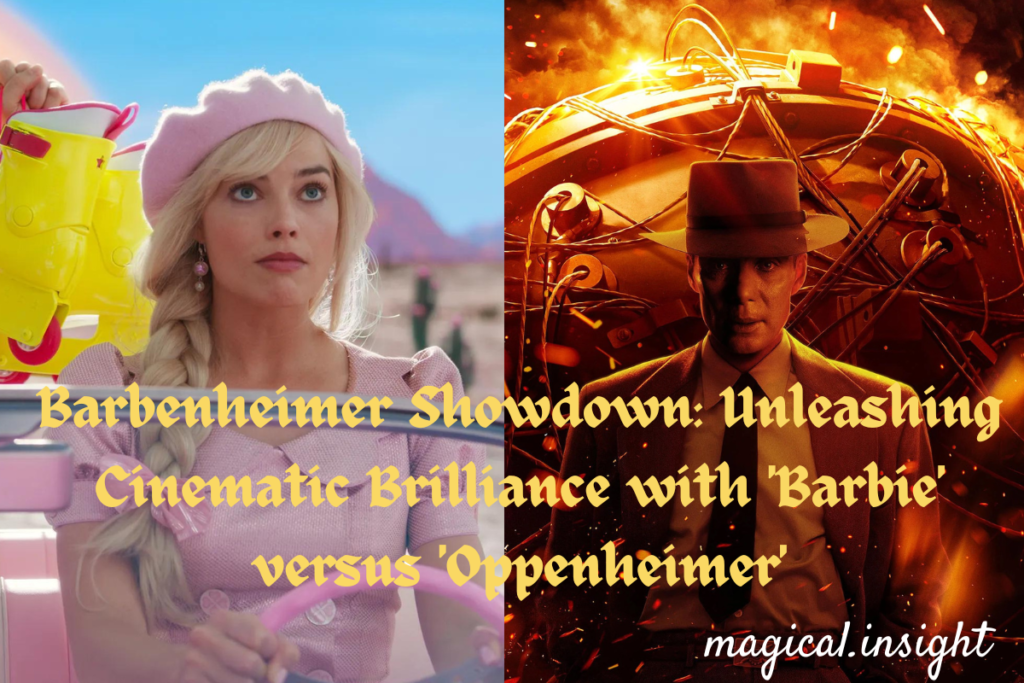
“Walk into the enchanted land of ‘Barbenheimer,’ where celluloid dreams ignite, meme soars to blockbuster glory, and souls entwine in a symphony of cinematic bliss! “
Greta Gerwig’s “Barbie” and Christopher Nolan’s “Oppenheimer” emerged as formidable competitors in a historic box office battle, capturing audiences with their distinctive stories and audacious imaginations. Surpassing all projections, both films made a combined $235.5 million in the US and Canada, sending Hollywood a clear message: originality and ingenuity, not only depending on exhausted franchises, are crucial to dominating the world of entertainment.
The neon-coated fantasy comedy “Barbie” debuted with a bang and won audiences over with its vivid depiction of a pink-drenched universe. The film not only exceeded pre-release projections but also set a record for the year’s highest opening weekend with a staggering $155 million in revenue. Thousands of moviegoers dressed in pink for screenings, doll memes filled social media, and the crowd turned out to be surprisingly varied, with a sizable male viewership, demonstrating the film’s bold cultural influence. Audiences from all backgrounds were impacted by Greta Gerwig’s directing as well as Margot Robbie and Ryan Gosling’s outstanding performances as the legendary Barbie and Ken.
On the other hand, “Oppenheimer,” Christopher Nolan’s R-rated historical drama, demonstrated that intelligent storytelling and box office success can coexist. The movie earned an astonishing $80.5 million in its first weekend owing to a strong performance by the film’s main protagonist and a riveting nuclear war story. Although “Oppenheimer” appealed to a distinct audience group, it showed that viewers are willing to connect with films that contradict their assumptions and prompt thought-provoking debates.
It’s interesting how the confrontation between these two box office titans changed the box office environment. Instead of having to decide between the two films, many spectators chose to see both ‘Barbie’ and ‘Oppenheimer’ on the same day, turning the competition into a double feature for the ages. This unexpected result demonstrated the enormous need for intriguing and diverse material in the film industry.
“Barbie” outperformed “Oppenheimer” in more than 70 different countries, proving to be an incredible competitor on the global stage. The movie’s success and influence on a worldwide scale proved that it had an appeal that went well beyond lighthearted humor. It resonated with viewers from all cultural backgrounds, reinforcing the ability of skillfully created storytelling to cut through boundaries and countries. In addition to energising the box office, this remarkable collision of cultural trends also gave the movie industry a boost at a time when it was still recuperating from the COVID-19 pandemic’s effects. “Barbie” and “Oppenheimer” demonstrated that extraordinary narrative and audacious originality can rekindle the enchantment of cinema, offering a glimmer of hope for directors, producers, and viewers alike.
Additionally, “Barbie” made history by being the biggest opening weekend for a female director’s movie. The success of Greta Gerwig marked a key turning point in a field where female filmmakers have always been underrepresented. Her success with “Barbie” furthered the notion that varied viewpoints and distinctive voices are crucial for fostering an inclusive and vibrant cinematic world. As the dust settles on this colossal box office war, Hollywood is left with a crystal-clear lesson: the industry must continue to embrace creativity and originality if it hopes to win over moviegoers’ hearts and drive the cultural discourse. The demand for original stories and fascinating films has been shown by audiences, proving that the time for recycled franchises alone is over.
In conclusion, the movie “Barbie versus Oppenheimer” will be remembered for more than merely its box office battle; it also marks an important turning point in the development of cinema. The films “Barbie” by Greta Gerwig and “Oppenheimer” by Christopher Nolan both show how engaging narrative, regardless of genre, can fascinate viewers and advance cinema to new heights. The message that moviegoers have repeatedly delivered to filmmakers and studios is clear: embrace originality, embrace diversity, and provide viewers with fresh, captivating content. The world of cinema is always changing, and it is the responsibility of filmmakers to forge a path of audacious and inventive narrative that will continue to captivate audiences for centuries to come.