
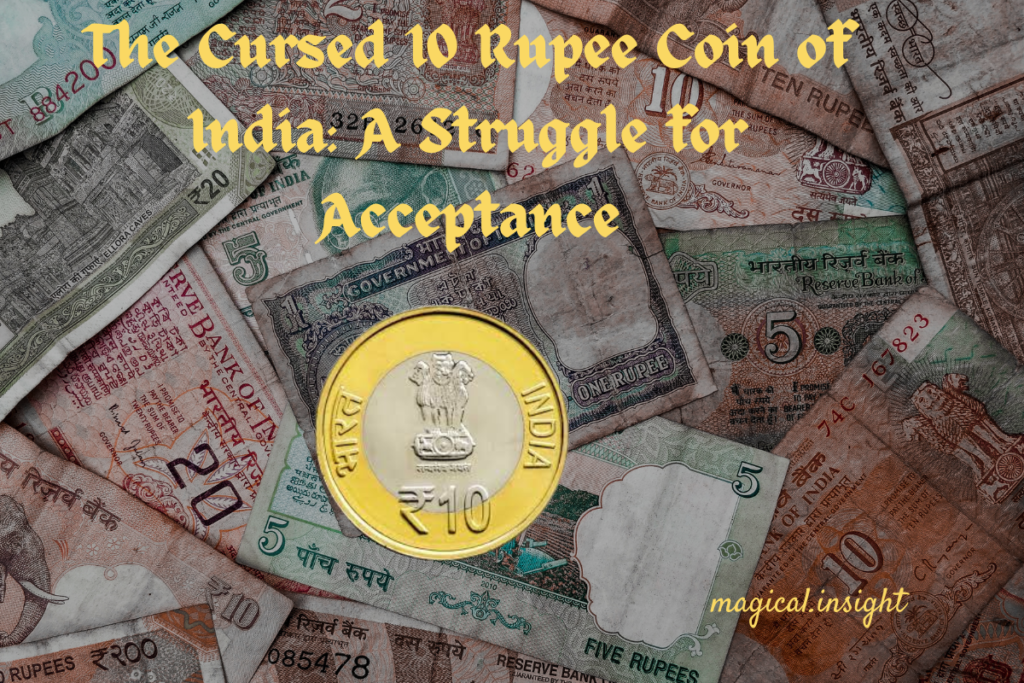
India, a nation with many different customs and religious beliefs, has had its fair share of legends and tales throughout history. One of the many fascinating stories revolves around the notorious 10 rupee coin. Shopkeepers all around the country are reluctant to accept this seemingly harmless bit of money because of its negative image as a jinx. I am going to address the history of the 10 rupee coin, the factors that led to its widespread discrimination, and the myths that have contributed to its dubious reputation through this piece of writing.
The 10 rupee coin was first introduced in India in 2005 as a legal tender by the Reserve Bank of India (RBI). It was introduced as a commemorative coin to mark India’s 60th year of independence. The Lion Capital of Ashoka, the national symbol of India, is depicted on one side of the nickel-brass alloy coin, while the denomination value is displayed on the other. At first, it was planned to progressively replace the 10 rupee note. The 10 rupee coin encountered opposition and prejudice in the marketplace from the very beginning. Shopkeepers and vendors often refuse to take these coins as payment, particularly in smaller towns and rural regions. This behaviour is caused by a number of variables, including confusion, superstitions, and practical considerations.
The 10 rupee coin’s resemblance in size, as well as appearance to the 1 rupee coin, is one of the primary root causes of prejudice against it. Shopkeepers frequently misidentify the 10 rupee coin as a one rupee coin out of haste, which costs them heftily. Many prefer to reject it entirely in order to prevent such misunderstanding. Another factor that adds to the 10 rupee coin’s unwillingness to be accepted is its weight. The coin weighs roughly 7 grams and is 27 millimetres in diameter, making it heavier and bulkier than the 10 rupee note. As an outcome, certain people see it as less valuable and dispute its validity, believing it to be counterfeit. Due to this scepticism, it is rejected by shops who prefer the 10 rupee note.
The pervasive prejudice against the 10 rupee coin is influenced by superstitions and beliefs. Some groups believe that these coins bring bad luck or that they are cursed. Misfortunes and mishaps have been linked to the usage or ownership of the 10 rupee coin, according to stories and rumours. Such erroneous perceptions contribute to the coin’s stigma, resulting in its non-acceptance.
Contrast with the 10 Rupee Note:
While the 10 rupee coin confronts significant prejudice, its equivalent, the 10 rupee note, is more widely accepted and used throughout the country. The 10 rupee note, with Mahatma Gandhi on the obverse, is seen as a more familiar and reliable type of cash. Its paper structure and different dimensions make it immediately recognised, limiting the possibility of misunderstanding. Furthermore, the note has a larger perceived value and has become thoroughly established in the Indian monetary system through time, increasing its popularity.
Efforts to Address the Discrimination:
The Reserve Bank of India has taken a number of steps to reduce the bias and superstitions attached to the 10 rupee coin in recognition of the challenges it encounters. To inform people about the reliability and worth of the currency, the RBI has conducted awareness programmes. Additionally, it has exhorted merchants and store owners to recognise the currency as legal money and promote its usage in the market.
Conclusion:
India’s infamous 10-rupee coin is still a puzzling and fascinating phenomenon. Despite being a legal form of payment, it nonetheless encounters discrimination because of its dimensions, look, and superstitious beliefs. The Reserve Bank of India’s efforts to dispel these myths have had varying degrees of success. It is crucial to promote a culture that accepts the usage of all legal money as India develops, encouraging a more inclusive and logical view of the 10 rupee coin and eradicating the long-standing myths and biases that surround it.